E17 packing tips for house removals near Walthamstow Market
If you are moving home in E17, especially around the busy, slightly chaotic stretch near Walthamstow Market, packing well can make the difference between a smooth move and a day that feels like organised panic. The good news? With the right approach, you can protect your belongings, save time on moving day, and make the whole process feel a lot less heavy. These E17 packing tips for house removals near Walthamstow Market are written for real life: narrow streets, awkward staircases, last-minute bits and pieces, and the usual London "where did all this stuff come from?" moment.
This guide covers how to pack efficiently, what to do before the movers arrive, and where people most often go wrong. It also includes a practical checklist, a comparison table, and a few local-minded suggestions that make sense for homes near the market, the station, and the surrounding streets.
- Why packing well matters in E17
- How the packing process works
- Key benefits and practical advantages
- Who this is for
- Step-by-step guidance
- Expert tips for better results
- Common mistakes to avoid
- Tools, resources and recommendations
- Law, compliance, standards, or best practice
- Options, methods, or comparison table
- Case study or real-world example
- Practical checklist
- Conclusion
- Frequently asked questions
Why E17 packing tips for house removals near Walthamstow Market Matters
Packing is not just about getting belongings into boxes. It shapes the entire removal day. In an area like E17, where homes can vary from compact flats above shops to family houses with loft storage and narrow hallways, poor packing creates avoidable problems fast. Boxes that are too heavy, items that are not labelled, and fragile belongings bundled together at the last minute all slow the move down. And near Walthamstow Market, where parking, access, and pedestrian traffic can add pressure, delays are even more frustrating.
Truth be told, many moving problems are packing problems in disguise. A sofa that cannot fit through the door is one thing. A sofa blocked by badly packed boxes, a loose lamp, and three abandoned bags in the hallway is another. Good packing gives your movers a clear path, protects your things, and helps you settle into the new place without spending the first evening hunting for kettle cables and toothbrushes.
It also matters because it helps you decide whether to manage everything yourself or bring in help. If you want a more hands-off move, it may be worth looking at packing and unpacking services as part of your wider house removals plan. That is often the sensible route when time is tight or the property is full of delicate items.
How E17 packing tips for house removals near Walthamstow Market Works
The basic idea is simple: sort, reduce, protect, label, and stage. The trick is doing each part in the right order. If you pack randomly, you create extra lifting, extra confusion, and extra risk of breakage. If you pack with a system, the move becomes much more manageable.
In a typical E17 move near the market, the process usually starts a week or two before moving day. First, you separate what stays, what goes, and what you can recycle or donate. Then you pack room by room, beginning with the items you use least. Soft items like blankets and clothes can be packed early. Daily essentials should stay out until the end. Fragile items need proper wrapping and reasonable box sizes, not giant cartons full of mugs and hope. Let's face it, hope is not a packing material.
It helps to think in zones. Keep one area for packed boxes, one area for donations or recycling, and one area for items you still need access to. If your building has shared access, try not to turn the hallway into a storage unit. That sounds obvious, but during a move, obvious things get forgotten.
For many households, choosing the right type of removal help makes the packing process easier too. Some people prefer a straightforward man and van option for smaller loads, while others need a fuller service from experienced movers. The better your packing, the easier either choice becomes.
Key Benefits and Practical Advantages
Well-planned packing gives you more than neat boxes. It changes the pace and mood of the whole move. Here are the benefits people notice most often.
- Faster loading and unloading: boxes with clear labels and sensible weights can be moved more efficiently.
- Less breakage: good wrapping, padding, and box selection reduce damage to glass, ceramics, electronics, and ornaments.
- Lower stress: when you can find the essentials quickly, moving day feels far less frantic.
- Better use of vehicle space: tidy packing helps your removal team load the van more logically.
- Safer lifting: lighter, even-weighted boxes are easier to carry and less likely to cause injuries.
- Quicker unpacking: a clear labelling system saves time in the new home, which is especially helpful if you are arriving late in the day.
One underrated benefit is emotional, really. When you pack properly, you get a sense that the move is under control. That matters more than people admit. A good packing job gives you a bit of breathing space, and during a house move that is worth a lot.
If you are comparing service levels, it may help to check removal services alongside your moving plan, especially if you want packing support, loading support, or a more structured move overall.
Who This Is For and When It Makes Sense
These tips are useful for almost anyone moving in or out of E17, but they are especially relevant if you are in one of these situations:
- You are moving from a flat with limited storage and a lot of mixed household items.
- You have a family home with years of accumulated possessions tucked into cupboards, lofts, and under-bed storage.
- You are moving near Walthamstow Market and expect parking, access, or timing to be a bit tight.
- You are trying to keep costs down by doing most of the packing yourself.
- You are using a smaller vehicle or a local team and need to maximise space.
- You have fragile items, artwork, instruments, or electronics that need proper protection.
It also makes sense for people who simply want a calmer move. Not every move is about saving every last pound. Sometimes the wiser choice is to reduce friction. If your move includes storage-heavy rooms or heavy furniture, you may want to read more about house movers and how they can support a fuller home relocation plan.
If you are moving with children, pets, or a tight deadline, proper packing becomes even more valuable. The same is true if you work odd hours and can only pack late in the evening after a long shift. It is not glamorous, but it is life.
Step-by-Step Guidance
1. Declutter before you pack
Start with a clear-out. If you have not used something in years, ask whether it deserves a place in the new home. This is the moment to separate recycling, donation, and rubbish. It is much easier to move fewer things than to pay for, carry, and unpack things you did not really want anyway. A small declutter can shave surprising time off the whole job.
2. Gather the right packing materials
Use strong boxes in a range of sizes, not just whatever you can find. Medium boxes are usually the safest all-round choice because they balance capacity with weight. You will also need tape, paper, bubble wrap or alternatives, markers, and protective covers for sofas, mattresses, or wardrobes. If you are going for a greener move, check the approach described on the site's recycling and sustainability page and aim to reuse suitable materials where possible.
3. Pack one room at a time
This is the classic advice because it works. Keep items from the same room together so unpacking is logical later. It also makes it easier for your movers to place boxes in the right part of the van and then in the right room at the destination. Bedrooms with mixed storage are where many people slip up, so take your time there.
4. Label more clearly than feels necessary
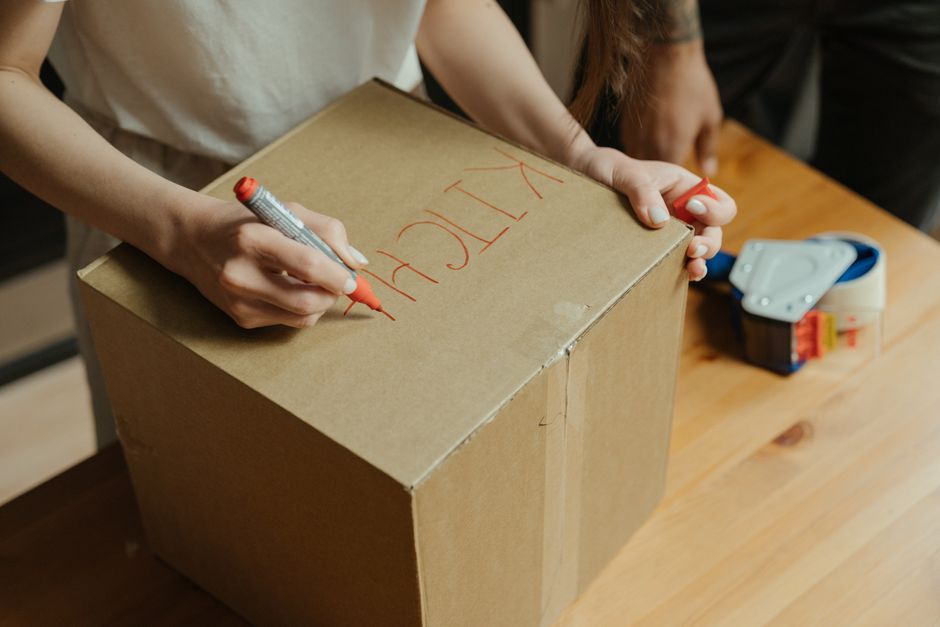
Write the room, the main contents, and whether the box is fragile. If the box should be opened first, say so. If it contains cables or chargers, say that too. One of the simplest tricks is to add a short code such as "KITCHEN - FRAGILE - OPEN FIRST." It is a bit dull. It works.
5. Create a first-night box
This should include the essentials you will need before you properly unpack. Think kettle, tea, mugs, toiletries, phone chargers, medication, basic snacks, loo roll, and a change of clothes. In a real move, this box is worth its weight in gold. You do not want to be hunting for toothpaste at 11pm while standing among half-open boxes and a silent fridge.
6. Protect fragile items properly
Wrap glassware individually. Cushion gaps in boxes so items do not rattle. Avoid overfilling boxes with heavy breakables. Plates should be packed vertically where possible, with padding between layers. Mirrors and framed pictures need special attention, and electronics should ideally stay in their original packaging if you still have it. If not, create your own padded structure carefully.
7. Keep important documents and valuables with you
Passports, contracts, keys, bank cards, jewellery, and personal documents should stay in a separate bag that travels with you. That reduces risk and gives you peace of mind. Moving day is busy enough without trying to remember which box contains your tenancy paperwork.
8. Stage boxes where they are easy to lift
Do not leave packed boxes in awkward spots behind doors or at the top of stairs. Put them where movers can reach them safely. If your property has a narrow stairwell or shared entrance, this matters even more. A clean route saves time and lowers the chance of knocks and scrapes.
9. Do a final walk-through
Before the van leaves, check cupboards, loft space, under sinks, and behind doors. It sounds obvious. People still forget things all the time. A final sweep means fewer calls later and less chance of leaving behind something awkward or valuable.
Expert Tips for Better Results
There are packing tips, and then there are the little details that make a move genuinely smoother. These are the ones experienced removals teams tend to appreciate.
- Use colour coding for rooms: a different sticker or marker colour for each room helps everyone place boxes faster.
- Keep box weights consistent: a heavy box should feel manageable. If you have to brace yourself to lift it, it is too heavy.
- Pack a few empty bags inside the van load: they are useful for last-minute items, loose bedding, or things found during the final sweep.
- Photograph cable setups before unplugging: this saves a lot of guessing later, especially with TVs, routers, and desktop equipment.
- Use soft items as padding: towels, jumpers, and bedding can protect less fragile items and reduce wasted space.
- Keep like with like: kitchen items with kitchen items, bathroom items with bathroom items. Sounds basic, but it saves real time later.
If you are hiring a vehicle or trying to estimate load size, it helps to think ahead about transport. A well-packed home often fits more easily into a removal van, while a larger move may suit a broader moving van arrangement. The fit matters more than people expect.
One small human tip: pack a box of things you are emotionally attached to, not just practically attached to. The mug your nan gave you. The old photo album. The one book you always keep by the bed. Moving is logistical, yes, but it is also personal.
Common Mistakes to Avoid
A lot of moving-day stress comes from the same handful of mistakes. Avoid these and you are already ahead.
- Overpacking boxes: this causes breakages, bad backs, and boxes that split at the worst moment.
- Leaving packing until the last night: rushed packing is rarely good packing.
- Mixing heavy and fragile items carelessly: the box may survive, but the glass probably will not.
- Not labelling at all: it creates chaos when you reach the new place.
- Packing items you still need that evening: medicine, chargers, keys, and snacks should not disappear into a random carton.
- Ignoring access constraints: on a busy E17 street, access can be just as important as the packing itself.
- Using poor-quality tape: weak tape is a tiny detail with very annoying consequences.
People also forget to measure awkward furniture. That is not strictly packing, but it often shows up during packing. If the headboard or bookcase is likely to be awkward in a tight stairwell, sort it out before moving day rather than during it.
Tools, Resources and Recommendations
You do not need a van full of specialist kit, but a few sensible tools make packing much easier.
| Tool or item | Why it helps | Best use |
|---|---|---|
| Medium cardboard boxes | Easy to lift and less likely to become overfilled | Books, kitchenware, mixed household items |
| Packing paper | Protects surfaces and fills gaps without adding too much weight | Glass, ceramics, ornaments |
| Strong tape | Prevents box failure during lifting and loading | All sealed cartons |
| Marker pens and labels | Makes room placement easier | Clear box identification |
| Furniture blankets or covers | Helps avoid scuffs and dust | Sofas, wardrobes, tables |
| Zip bags | Keeps screws and fixings together | Dismantled furniture and wall brackets |
If you are comparing service options, the distinction between man with a van, fuller removal company support, and a larger team can shape how much packing you need to do yourself. For a quick job, a simpler setup may be enough. For a larger family move, extra support may pay off quickly.
For people wanting a more complete service, the site's packing and unpacking services page is a sensible place to understand what hands-on help can look like in practice.
Law, Compliance, Standards, or Best Practice
For most household moves, packing is guided more by best practice than by a long list of formal rules. Still, there are a few sensible standards worth bearing in mind. In the UK, removals providers should handle goods carefully, communicate clearly about service expectations, and operate with suitable insurance and safety awareness. If you are using professional movers, it is reasonable to ask how they approach handling, loading, and damage prevention.
Best practice also includes safe manual handling. Boxes should be kept at manageable weights, and paths should be kept clear. If there are stairs, shared entrances, or awkward turns, that should be accounted for in advance. That is just common sense, although common sense can get crowded out on moving day.
It is also worth checking terms, payment expectations, and insurance information before the move. Good providers make this clear up front, which helps avoid confusion later. If you want to understand how a company sets out these details, look at the site's pages on insurance and safety, payment and security, and terms and conditions.
If you are moving out of a rented property, your landlord or letting agent may have their own expectations around condition, keys, and end-of-tenancy handover. Packing neatly and moving out in an orderly way helps here too, because a calmer move is less likely to leave behind avoidable mess or damaged items.
Options, Methods, or Comparison Table
Different packing methods suit different homes. Here is a simple comparison that may help if you are deciding how hands-on to be.
| Method | Best for | Pros | Watch-outs |
|---|---|---|---|
| Self-packing only | Smaller moves, tight budgets | Lower cost, complete control | Time-consuming, easy to mislabel or overpack |
| Hybrid packing | Busy households, mixed item types | Good balance of control and support | Requires clear communication about what is packed by whom |
| Full packing service | Larger homes, fragile items, tight schedules | Fast, organised, less stress | Higher cost than DIY only |
In practice, a hybrid approach often works best for E17 households. You pack personal items, clothes, and simple belongings, while leaving awkward, fragile, or bulky pieces to experienced help. That is not a cop-out. It is efficient.
If you are still weighing up whether you need fuller support, house removalists may be worth considering when the move involves more than a simple point-to-point transfer.
Case Study or Real-World Example
A typical example is a two-bedroom flat near Walthamstow Market with a tight hallway, a few stairs, and more storage than the owners realised when they started unpacking. The couple meant to begin packing "next weekend," which turned into a very British sequence of postponement, tea, and half-folded cardboard.
When they finally started, they did three things well. First, they decluttered one cupboard at a time and got rid of a stack of duplicate cookware and old paperwork. Second, they packed the bedrooms early and left daily essentials until last. Third, they labelled each box with room name and priority, which made unloading much easier. They also kept a first-night box separate, which, according to them, was the moment the whole move stopped feeling like chaos.
What did not go perfectly? A few too-heavy boxes of books. Classic. They had to split them once they realised carrying them down the stairs was awkward and unnecessary. But because the rest of the packing was orderly, the team loading the van could work quickly, and the move ended up being far smoother than they expected.
That is the real lesson here: you do not need flawless packing. You need thoughtful packing. A move can still have a few scruffy moments and go well. We are not trying to win a packing competition.
Practical Checklist
Use this checklist in the final days before your move near Walthamstow Market.
- Sort items into keep, donate, recycle, and discard.
- Gather boxes, tape, labels, and protective materials.
- Pack by room, not by random availability.
- Wrap fragile items individually.
- Keep box weights sensible.
- Label every box clearly.
- Prepare a first-night essentials box.
- Set aside documents, keys, jewellery, and medication.
- Dismantle furniture where needed and keep fixings together.
- Check lofts, cupboards, under beds, and behind doors.
- Keep pathways clear for movers.
- Confirm timing, access, and parking arrangements in advance.
- Review any service details you need from your chosen removals provider.
Useful reminder: the last 10% of packing often takes 30% of the time. Leave space for that. It always happens.
Get a free quote today and see how much you can save.
Conclusion
Moving home in E17 does not have to feel overwhelming. When you approach packing in a structured, realistic way, the whole move becomes easier to manage. Near Walthamstow Market, where access and timing can add a bit of extra pressure, good packing pays off twice: it protects your belongings and makes the removal day flow better.
Keep it simple. Declutter early, pack by room, label properly, and protect the things that matter most. If you need extra help, choose support that matches the size and pace of your move. A calm, well-organised move is not about perfection; it is about reducing the unnecessary stress. And that, honestly, is the part everyone remembers.
Take a breath, make a plan, and trust the process a little. The boxes will get there, and so will you.
Frequently Asked Questions
What are the most important E17 packing tips for house removals near Walthamstow Market?
The most useful tips are to declutter first, pack one room at a time, label every box clearly, and keep a first-night essentials box separate. In a busy local move, those basics save a lot of hassle.
How early should I start packing before a house move?
Ideally, begin with non-essential items one to two weeks before moving day. If you have a larger home or lots of storage, start even earlier. Leaving everything until the last 24 hours usually causes stress and poor packing decisions.
Should I pack room by room or item by item?
Room by room is usually better. It makes both loading and unpacking much simpler. Item-by-item packing tends to create mixed boxes that are hard to sort later.
What should go in a first-night box?
Include toiletries, phone chargers, kettle, mugs, tea or coffee, loo roll, medication, a change of clothes, snacks, and basic bedding if needed. Anything you will want immediately should be easy to reach.
How do I pack fragile items safely?
Wrap each item individually, use plenty of padding, keep heavy fragile items in small boxes, and fill empty spaces so things do not shift around. Plates, glasses, and mirrors need extra care.
Is it worth using packing and unpacking services?
Yes, if you are short on time, have a lot of fragile belongings, or simply want a calmer moving day. It can be especially helpful for larger homes or awkward access near busy roads.
What type of boxes are best for removals?
Medium-sized strong boxes are usually the most practical. They are easier to lift and less likely to become dangerously heavy. Larger boxes are fine for lighter items like bedding or cushions, not books.
How do I avoid overpacking boxes?
Stop before the box becomes difficult to lift comfortably. If you have to strain, split the contents into two boxes. That small bit of extra cardboard is worth it.
Do I need special packing for furniture?
Yes, where possible. Dismantle furniture carefully, keep screws and fixings in labelled bags, and protect surfaces with blankets or covers. Measure awkward pieces before move day if access is tight.
What should I do with items I do not want to move?
Sort them into recycling, donation, or disposal before you start packing the keep pile. That reduces load size and makes unpacking much easier at the new home.
Can a man and van service handle a properly packed home move?
Yes, especially for smaller or medium-sized moves. The better the packing, the more efficiently a smaller vehicle can be loaded. It is a good option when you want something flexible and local.
How do I make moving day easier near Walthamstow Market?
Plan access carefully, keep the walkway clear, label boxes well, and avoid last-minute packing. Near the market, timing and space can be tighter than you expect, so preparation really helps.